- Gym World
- Posts
- What gym owners get wrong about branding
What gym owners get wrong about branding
And how every interaction in your gym shapes the way people see your business

John Franklin
March 08, 2026
What's up Gym World?
Boris Kezic ran a design agency for over a decade before he started Metcon Creative—a branding company that works with gyms, coaches, and wellness businesses. He's done projects with OPEX, Urban Movement, Hydra, and a ton of independent gyms. And through it all, he's found that most gym owners misunderstand branding.
Many owners think that branding is their logo, colors, and website. That may be the physical representation of your brand, but to your customers, it’s much more than that.
Your brand is how people feel every single time they interact with your business. And that feeling starts way before they ever walk through your door.
If you want to see the full conversation, watch the interview below.
If you don't have time, here's what Boris had to say about what gym owners get wrong and how to fix it.
The brand vs. the act of branding
Boris differentiates between brand and the act of branding. The brand is how people perceive your business. The act of branding is your chance to influence that perception.
Boris makes sure his clients understand this at the start so that the brand can be built the right way. He says it makes branding more fun because now you get to decide how to influence the perception of your gym.
Once you understand that, you can stop trying to control your brand and focus on the things that actually matter, like the details and interactions that shape how people feel.
💬 Boris says most gyms over-professionalize their branding, making it feel more like a corporation. His fix is to showcase your gym’s personality in your branding so you differentiate yourself from competitors.
Start with strategy, not the logo
Boris often works with gyms that come to him two or three years in, but they’re not growing. They can feel that there’s a disconnect between what they're putting out and what's actually happening inside the gym.
Here’s where gyms get stuck, thinking they need a rebrand when really they need to go back 30 steps and start with strategy instead of the logo.
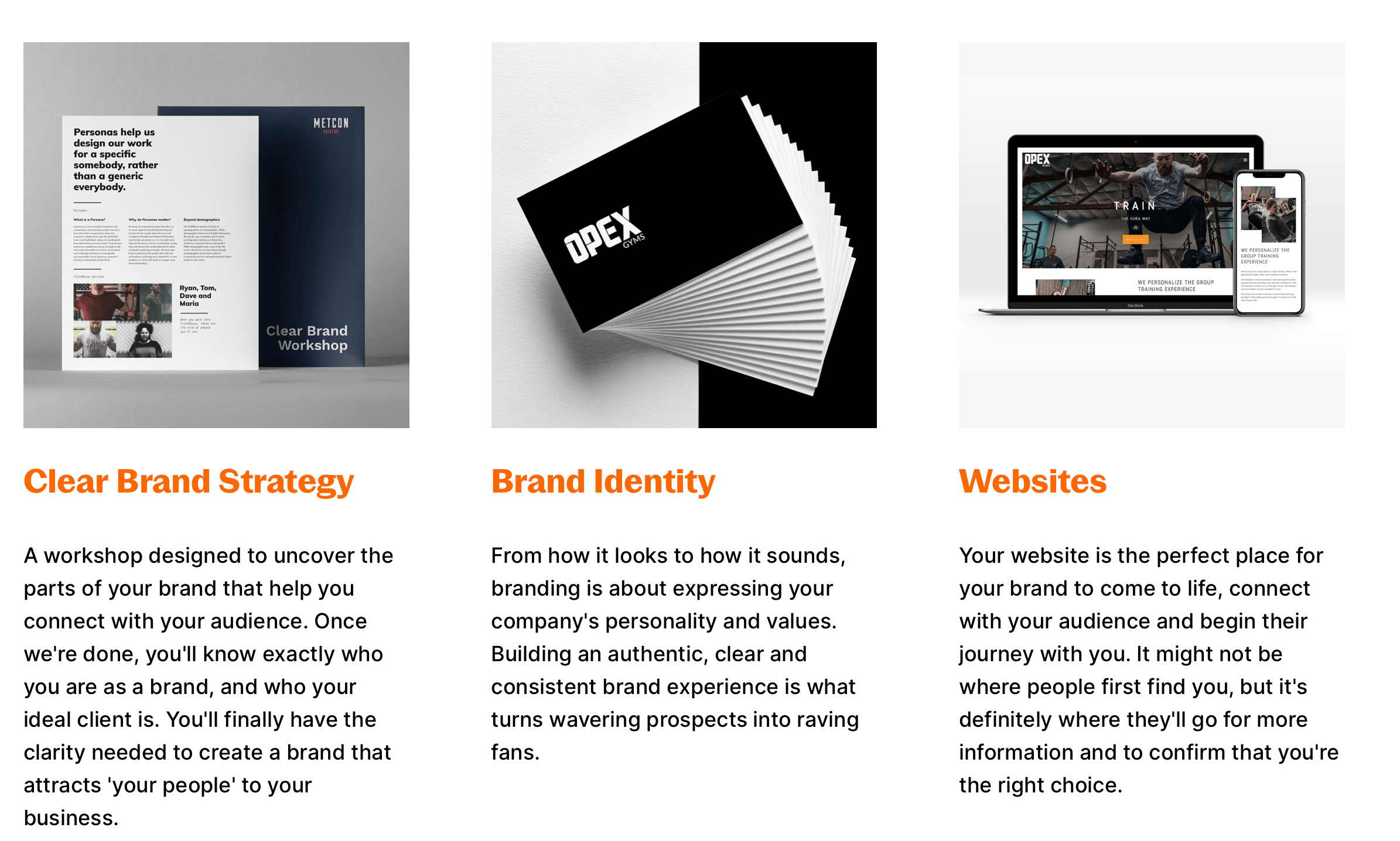
What that looks like:
What does your business stand for?
What are your beliefs about fitness, coaching, and nutrition?
Who are you actually serving? (This is not everyone.)
What makes your gym different from every other option in town?
If you can answer those clearly, the logo and everything else becomes easy. You know exactly what you're trying to say and who you're saying it to.
💬 Boris said that if you skip the strategy, you end up with generic marketing that sounds like everyone else. And generic doesn't get remembered.
You’re branding your gym, whether you mean to or not
One of Boris’s points is that branding is happening all the time, whether you realize it or not.
Every touchpoint someone has with your gym sends a message about the business. That includes the obvious things like your website, photos, and social media, but also smaller details like your booking flow, onboarding emails, and how easy it is to get information.
At one point, Boris stopped posting work on social media because he was busy with client projects. A former client eventually reached out to check in, thinking he might have gone out of business.
Nothing had actually changed. But from the outside, it looked like Boris was MIA.
An outdated website, unclear information, or poor presentation may seem like minor issues to the owner. But to someone encountering the business for the first time, those details help shape their perception of how the gym operates.
The experience around the experience
Gyms are one of the few businesses where customers interact with the brand multiple times every week. Boris explains the real differentiator is the “experience around the experience,” from the moment a member enters the gym to when they leave. The workout matters, but so does every other interaction members have with your gym
💬 Boris's advice: Map out the entire member experience from the moment they start driving to your gym to the moment they get home. Every single touchpoint is a branding opportunity.
Greg Glassman used to say he'd walk into a CrossFit gym and go straight to the bathroom first because it would tell him everything he needed to know about the business.
Boris agrees. The details matter, and you should obsess over them.
Photography matters more than you think
If Boris had to choose between hiring a designer or a photographer, he’d pick the photographer. His reasoning: people respond to images faster than words.
Boris explains why showcasing elite athletes can unintentionally make your gym look like it’s only for advanced members, and how the right imagery can make your brand feel more welcoming from the moment they land on your site.
Here’s what makes good gym photography:
Show relatable people doing relatable movements (not CrossFit Games athletes snatching overhead)
Make it slightly aspirational. Use someone who looks like your prospect but 10% leaner or stronger
Show people smiling, making eye contact, looking like they belong
If your photos are dark, blurry, or full of empty barbells, people won't see themselves in your gym. And if they can't see themselves there, they're not coming.
💬One of our previous guests, Cassie Day, books quarterly photoshoots, so she always has fresh, high-quality visuals.
Stop writing like a robot
Gym websites often rely on identical language.
Phrases like “results-driven,” “personalized,” “supportive,” and “community-focused” appear everywhere in gym marketing. The problem isn’t that these ideas are wrong. The problem is that they’ve become so common that they no longer mean anything or differentiate one gym from another.
Part of the challenge is that most people barely read website copy in the first place. We’ve seen that visitors usually only read about 15–20% of the text on a page. That means the words people do notice matter even more. And the highlighted phrases need to stand out from your competitors’.

Boris also points out that tools like AI can make this easier to fall into. Large language models tend to generate the most common version of something. If you ask for gym website copy, the result will usually sound like every other gym’s website.
That doesn’t make AI useless, but it works best when it’s refining human ideas, not replacing them.
Get your robot to interview you. In that interview:
Describe who your gym is for
What you believe about training
What members can expect
💬 Boris's process: Write a first draft, then use AI to refine it. That way, the voice stays human, and the message stays aligned.
Don't promise what you can't deliver
Many gyms market community as their biggest selling point, but Boris argues that’s rarely why people join. Most members start because they want results such as losing weight, getting stronger, or improving their health. Community often keeps people around, but if the results don’t match the promise, members eventually notice the gap.
If a gym markets itself as results-driven but members don’t see meaningful progress, people eventually notice the gap. Lead with results, but build the community that helps members stay consistent long enough to achieve them.
TL;DR
Your brand isn't your logo. It's the experience people have every time they interact with your gym, and that starts before they walk through your door.
Boris's advice:
Start with strategy, not visuals.
Define what you stand for.
Map every moment of the member experience.
Make it frictionless.
Make it personal.
Make it consistent.
And while branding starts with strategy and operations, the systems behind your gym still matter. Kilo provides gym websites and management software that make it easier to manage bookings, communication, and day-to-day operations, so the experience your members have actually matches the one you promise.
Check us out at usekilo.com.
hope this helps,
j