- Gym World
- Posts
- This tiny gym pulled in $2.6M revenue
This tiny gym pulled in $2.6M revenue
Inside the growth, timing, and exit strategy behind Australia’s top boutique gym

John Franklin
December 12, 2025
Hey Gym World,
Out of the thousands of gyms Australia has, very few stand out. Even fewer win national awards, scale to seven figures, or keep staff for seven and a half years.
Ben Lucas of Flow Athletic did all three. And then he sold it all.
This week, I sat down with him to talk about timing, scale, selling a gym, and how he built one of the most successful boutique studios in the Asia Pacific.
Watch the full story below or read on for the highlights.
The beginning of Flow Athletic
Ben’s journey into fitness started like many trainers, through sport. While playing professional rugby, he began offering personal training in 1997. By 2005, he had opened his first personal training studio and soon added two more.
Years later, a visit to Equinox Tribeca in New York inspired him to bring a high-end boutique fitness experience to Australia. To make it happen, he sold all three locations and focused on building Flow Athletic.
Flow opened in 2013 in a 3,000 sq ft space, offering:
Yoga
Spin classes
Strength training
Reformer Pilates
1-on-1 personal training
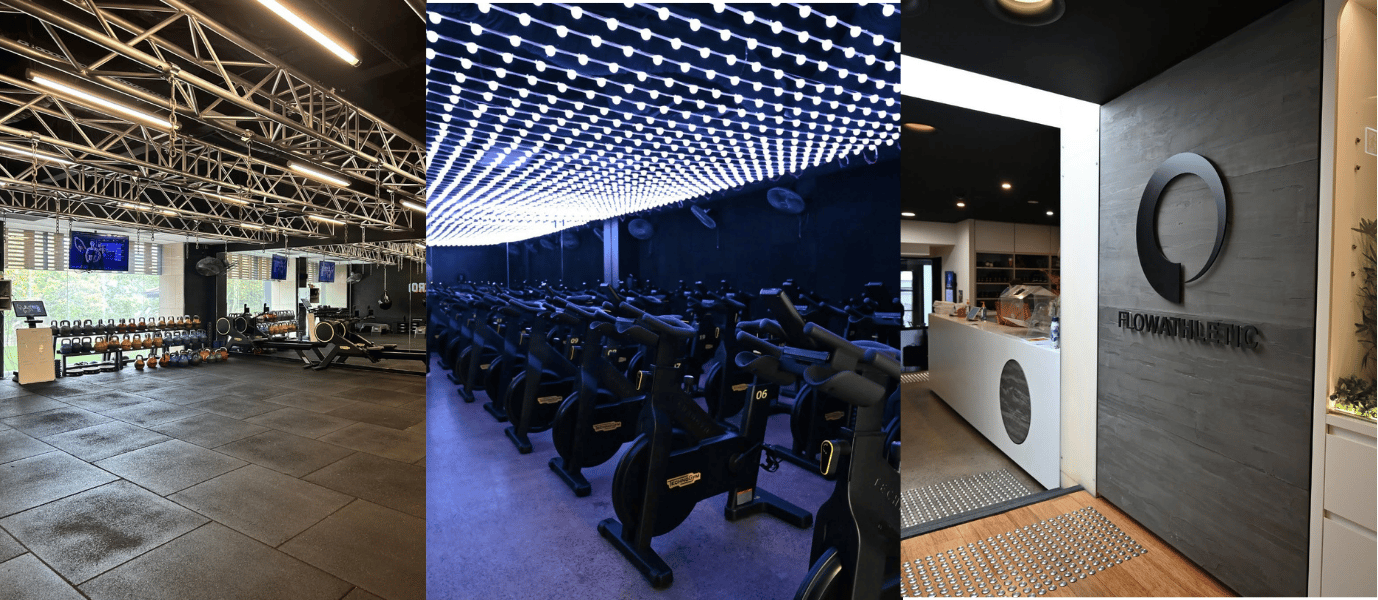
Ben and his partner were among the first to bring true high-end boutique fitness to Australia. Flow quickly became a category leader, achieving:
Over 1,000 members
400 personal training sessions per week
Multiple national awards
All this in a market that barely had group fitness at the time.
The formula behind Flow’s success
Many gyms overlook how much revenue their space could generate, but Ben didn’t. Flow generated approximately $4 million AUD per year (~$2.6M USD) out of just 3,000 sq ft because every square meter was intentional.
Nothing sat unused, equipment was carefully chosen, and the layout maximized revenue.
💬 Other gym owners we’ve featured have made the most of their space, too. For example, Haylin Alpert of Core Principles Personal Training earns about $300K USD per year from just 575 sq ft.
These design choices helped Ben make every square meter count:
No dead zones
No oversized reception desks
No giant retail areas
Minimal equipment

Ben had used this approach before. His first gym, only 400 sq ft, pulled in $1 million AUD (~$650K USD), and Flow was simply a larger-scale version of that same formula.
💬 Ben believes timing is important. He has a track record of entering markets early: his PT studios offered premium training before it was common, and Flow launched high-end boutique fitness in Australia before it became mainstream.
Flow’s success also came from a strong pricing model. At the time of sale:
Unlimited group fitness: $60 AUD per week (~$39 USD)
Personal training sessions: $120 AUD each (~$78 USD)
Rent: $700K AUD per year (~$455K USD)
Even with premium rent and limited space, Flow remained highly profitable because classes and personal training sessions were full, and every area of the gym generated revenue.

Flow also kept staff far longer than the industry norm. Boutique gyms typically lose coaches every 18–24 months, but Flow’s team stayed an average of 7.5 years. One trainer has even been with Ben for 18 years across multiple businesses.
Ben credits this long-term staff retention to:
Aligning business goals with staff goals
Paying team members well
Treating people like humans first
Creating roles that supported the futures they wanted
💬 Ben says staff stay longest when the business’s goals and the team’s goals overlap. If the focus leans too heavily toward the owner, people burn out. If it leans too far toward the staff, resentment eventually builds. The sweet spot is somewhere in the middle.
And while Flow ran traditional marketing like ads, Ben says the real engine of growth was community. In the early days, some spin classes had only two people, but he delivered the same world-class experience he would have given a room of forty. That consistency became Flow’s differentiator, and word-of-mouth was the primary driver of growth.
Why Ben sold Flow Athletic
Ben felt he had taken Flow as far as he could. The boutique fitness market had grown more crowded, and new competitors were entering the space. After 12 years of building the business, he decided it was the right time to sell.

The sale was officially announced in April 2025.
Ben worked with a fitness-specific broker to determine a fair price. Because of the gym’s reputation, size, and quality, he secured a 4× profit multiple. This is at the high end of what gyms typically sell for in Australia.
💬 When I sold my CrossFit gyms, the valuation came in at 2-3x the profit, and Mark Fisher Fitness sold for 2.5x.
Ben has no regrets. He gave Flow everything he had and left the gym in a strong position for new ownership. Now, as the Head Coach of the Sydney Marathon, he’s focusing his energy on building one of the world’s premier marathon programs.
💬 Many gym owners eventually start thinking about life after running a business. Some step away to focus on new priorities. Mike Doehla, for example, sold his nutrition company to focus on family and life beyond the daily demands of running a business. Read his story here.
TL;DR
Ben’s success came from making intentional choices. He built Flow by spotting trends early, designing a space where every square foot earned revenue, and creating roles that aligned the team’s goals with the business’s goals.
He focused on people, operations, and a scalable model, proving that a small footprint can outperform the competition and retain staff long-term.
And when the timing was right, Ben sold Flow on his terms and left the business in a strong position for new ownership. Now he’s channeling that same energy into building the Sydney Marathon program.
For more insights on building, running, and exiting a successful gym, watch or listen to the full interview on Gym World.
ciao,
j