- Gym World
- Posts
- This gym built PT into 52% of its revenue
This gym built PT into 52% of its revenue
Inside a gym model built around families, not just members

John Franklin
April 03, 2026
What’s up Gym World?
This week, we brought Bobby Armock on the pod. He owns a gym in Grand Rapids, Michigan, called Friction.
He bought the business four months before COVID hit, which forced him to rethink how the gym operated almost immediately. Today, personal training drives around 52% of total revenue, and the business looks very different from the CrossFit gym he took over.
Watch the full interview below or keep reading.
Starting with 100 clients before owning a gym
Before Bobby ever owned a gym, he already had a fitness business.
Shortly after college, he was working with around 100 personal training clients. He decided to pivot into physical therapy but quickly realized the limitations that came with insurance-based care.
That pushed him toward coaching instead.
Early on, he worked with a wide range of clients, including people dealing with serious injuries like strokes and paralysis. That experience shaped how he approaches training today. His focus is more on the outcome and less on the workout itself.
Eventually, he ended up coaching at a CrossFit gym. After managing it for 18 months, he found he enjoyed the operational aspect and approached the owner to buy it.

Buying the gym forced a shift
He went from being a coach with a full client roster to someone responsible for operations, staff, and long-term direction. Then COVID hit, which accelerated that transition and forced him to reevaluate the business model much faster than expected.
Instead of doubling down on CrossFit, Bobby expanded the scope of the gym. Friction shifted from being class-focused to becoming a multi-service performance facility, built around solving a wider range of problems for members.
At the same time, he made a key real estate move. He doubled the size of the facility while reducing his cost per square foot to less than half of what he was paying before. That gave him the physical space to expand services without increasing overhead at the same rate.
💬 More space usually means more cost. He flipped that equation, which gave him room to grow without adding pressure. We saw another wild real estate story with Jared Byczko, of Myriad Health & Fitness, where he sold his building, then used it rent-free for three years.
What the business looks like now
Today, Friction is structured more like a performance hub than a traditional gym.
It combines multiple services under one roof, allowing members to solve different problems in one place instead of going elsewhere.
The model includes:
Personal training
Group fitness classes
Youth training through Parisi Speed School
Nutrition coaching
Specialty programs like powerlifting and gymnastics
Integrated services like chiropractic, physical therapy, massage, and sports psychology
💬 Most gyms expand by adding more classes. This model expands by adding more value per client. This is highlighted in the latest State of the Industry report.
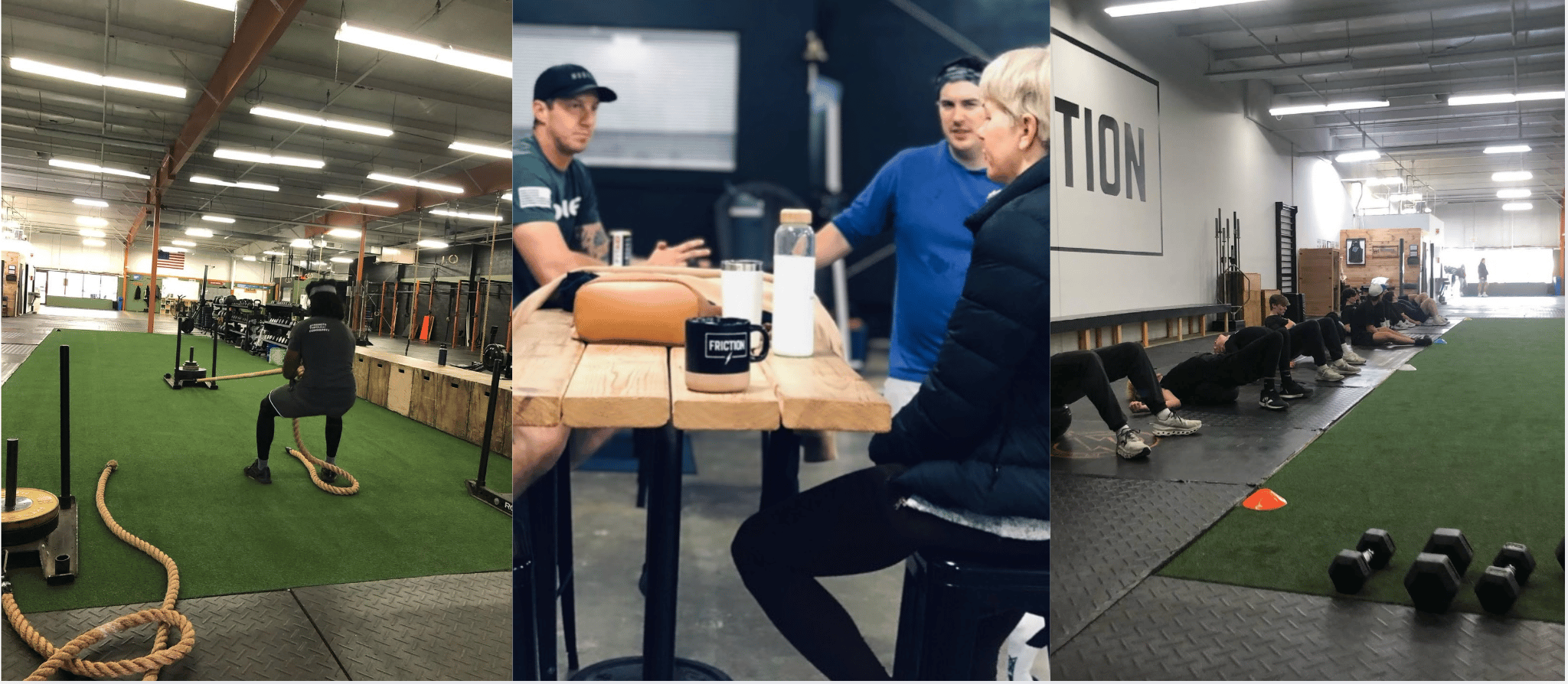
Business Breakdown
Revenue mix
Personal training leads the business, generating about 52% of total revenue. Group classes still play a role, but they’re not the primary driver. Youth programs and additional services add depth to the model.
Group classes
Classes are capped at 20 members, but typically run closer to 7–12 people.
This is intentional because Bobby has found that smaller groups allow for more coaching, better relationships, and a higher-quality experience.
Sales process
Everything starts with a conversation. And like I always say, more conversations equal more conversions.
From there, the process moves into intake, assessment, and building a clear plan based on the individual.
For youth athletes, that includes structured evaluations, benchmarks, and development plans. For adults, it’s more focused on lifestyle, goals, and long-term sustainability.
💬 Many gyms try to sell quickly. This approach focuses on clarity first, which makes the sale easier later.
Systems and operations
Friction uses systems to keep the business consistent as it grows.
CRM and automation through Kilo
Lead nurturing with human follow-up
Standardized assessments and onboarding
Performance and nutrition tracking
Staff accountability through KPIs
Team development
A big part of the model is building a strong team.
Bobby focuses on developing coaches into long-term professionals rather than short-term staff.
That includes:
Promoting internally into leadership roles
Weekly mentorship and check-ins
Hiring for character and alignment
Incentives tied to performance
💬 Coaches who see a future in the business tend to stay longer and perform better. That stability compounds over time. We have seen this proven with Ben Lucas at Flow Athletic.
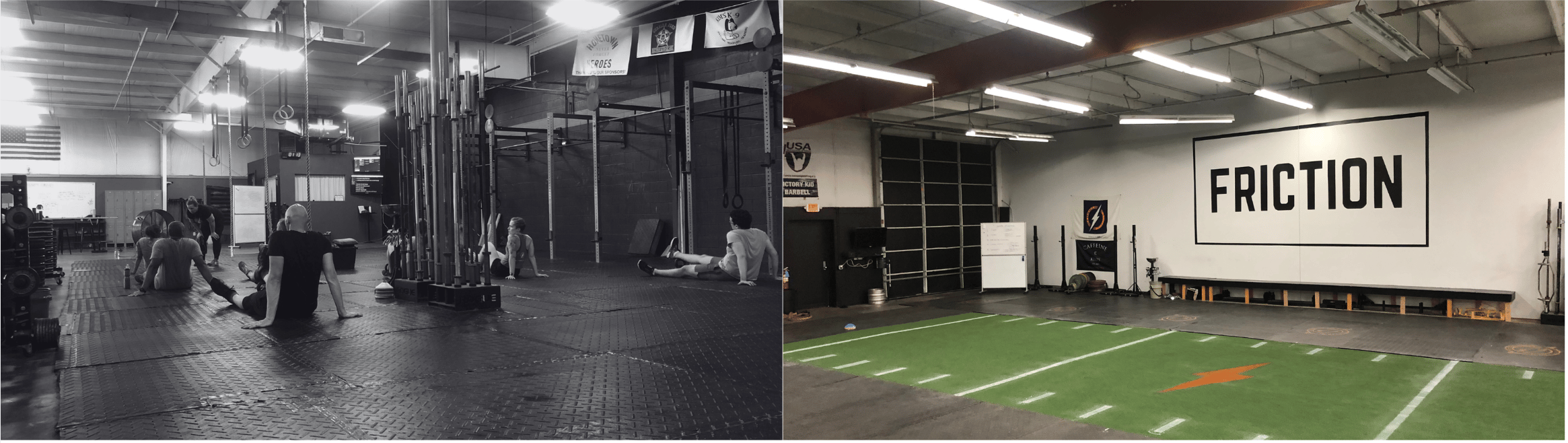
The family-based model
One of the more interesting parts of this business is how it’s structured around families.
Kids train through the Parisi program. Parents are already in the building, watching sessions, which creates a natural entry point.
When a family signs up for youth training, parents get their first month of adult classes free.
Bobby’s reasoning is that you’re already paying the coach to run the session, and the parent is already there. So he created a way to get them involved.
The beauty of it is that once they start training, most of them stay. This is a great strategy because it doesn’t require new traffic. It converts the people already in your building.
The model extends beyond just parents. Siblings also train, and in some cases, extended family will join.
Over time, it becomes one household, all bought into the same gym.
💬 It’s easy for one person to cancel, but it’s much harder for an entire family to leave.
Industry insight
More gyms are moving toward this type of model.
Less reliance on large group classes. More emphasis on personal training, semi-private training, and additional services.
We’re also seeing growth in youth performance programs, integrated health services, and family-based memberships.
The gyms that last tend to solve broader problems, not just fitness.
TL;DR
Bobby built Friction by:
Driving 52% of revenue through personal training
Using a consultation-first sales process
Expanding into youth and family services
Building an integrated service model
Investing in coach development and systems
Increasing space while lowering cost per square foot
If you found this valuable, share it with another gym owner.
until next week
j