- Gym World
- Posts
- This coach fills 80-person HYROX camps
This coach fills 80-person HYROX camps
And it added $100K in revenue to the gym

John Franklin
March 13, 2026
What's happening Gym World?
HYROX is quickly becoming one of the biggest participation sports in fitness. And some gyms are figuring out how to turn that momentum into serious revenue.
Case in point: AJ Schrag, a HYROX coach running a program inside Catalyst Movement in Stamford, Connecticut.
The program is on pace to generate around $100,000 in revenue for the gym. And it started with a Canva flyer.
Watch the full interview here.
The backstory
AJ wasn’t originally planning to run HYROX camps. He was a runner who also lifted weights and had some CrossFit experience.
In June 2024, he competed in his first HYROX race in New York City. After the race, a HYROX staff member told him he’d make a good coach.
So he got HYROX certified. He was coaching out of LifeTime, but they didn’t allow HYROX programming, so AJ looked for another option.
That’s when he connected with Joe Bags, the owner of Catalyst Movement.
Together, they launched the program.
💬 I recently chatted with Joe to get all the low-down on his gym. You can read that here.
The first test
The launch strategy was about as simple as it gets:
Canva flyer
Instagram post
Email outreach
That’s it.
42 athletes showed up to the first camp.
💬 We’ve seen other gym owners add events successfully. Conor Oakley and Tina Morin both use events to attract more leads.
Demand exploded
The original plan was to run five camps, but the demand quickly changed that, and they ended up running 10 camps in the first year.
Participation grew fast:
First camp → 42 athletes
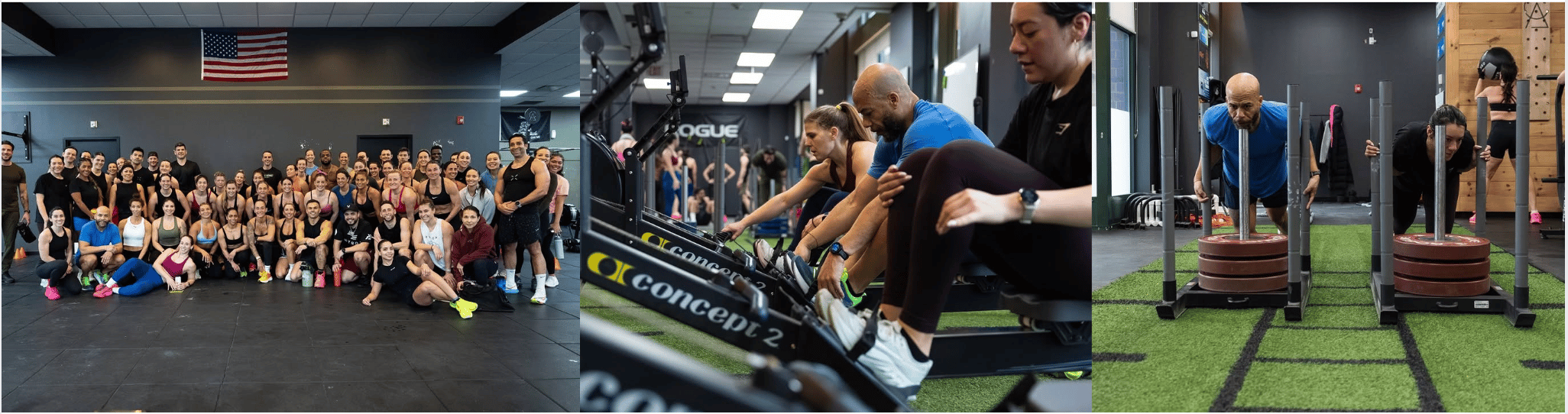
Recent camps → 72–86 athletes
Total athletes trained → 185
Today, the camps regularly draw 70–80 athletes per session, many of which are returning athletes. Often, the camps are waitlisted.
The business model
Each session is structured like a mini competition workout, so participants know exactly what the real race will feel like.
Camp structure
90-minute sessions
Athletes organized into pods of 6–8
Station-based training with metrics
Stations include running, sled pushes, rowing, farmer carries, wall balls, and burpee broad jumps. Each station has a specific target metric (time, distance, or reps).
The goal is to make the workout feel like race prep and not just another conditioning class.
Pricing
Most participants already belong to another gym, so Joe and AJ made pricing intentionally accessible.
Drop-in is $35 per session.
Package options:
10 camps → ~$25/session
8 camps → ~$30/session
6 camps → ~$32.50/session
The typical event includes:
~60 pack members
10–15 drop-ins
Additional revenue streams
Once the camps gained traction, the program expanded beyond just events.
They added a weekly HYROX class that now has about 25 regular members. The class runs once per week and focuses more on coaching athletes through skills and race-specific drills rather than the large event-style workouts used in camps.
It started small with 6–8 athletes, but as interest in HYROX grew, the class filled up quickly.
Another interesting piece of the model is sponsorships.
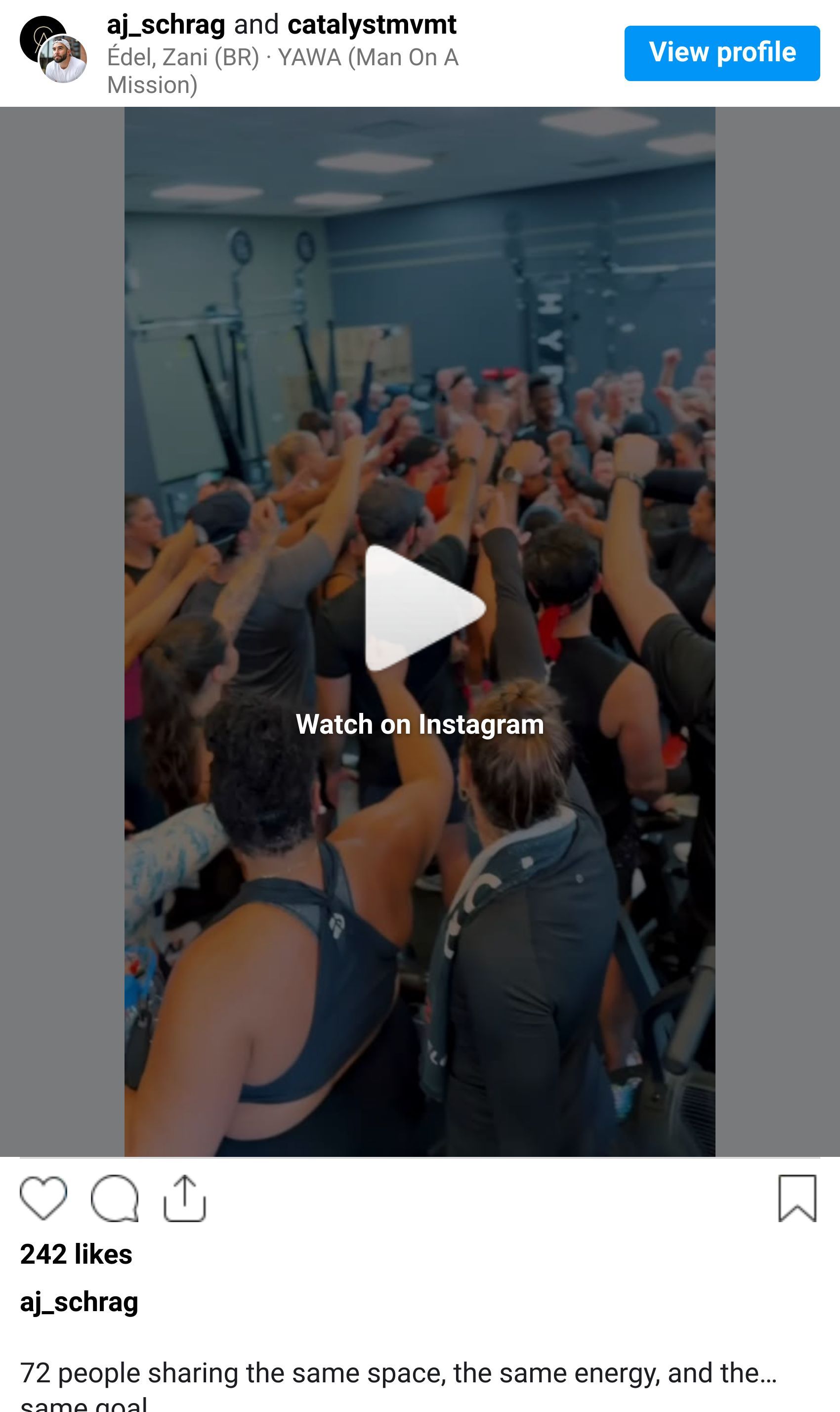
Brands like Red Bull, Hyperice, Enervit, Sport Coffee, and Caine Footwear support the camps with products, giveaways, and event activations. The sponsors help elevate the experience.
💬 What would normally feel like a group class ends up feeling more like a fitness event with DJs, community energy, and brand partners involved.
The secret: training pods
Here’s the operational trick that makes the model scalable with one coach.
Athletes train in pods of 6–8 people rotating through stations. Here’s what it looks like.
Pod of 8:
4 athletes on SkiErg
4 athletes completing farmer carries
After 250 meters, they switch. Pods rotate station to station until the session ends.
💬 This is one of the most scalable group training setups we’ve seen.
The marketing strategy
The first camps didn’t require a complicated marketing plan.
AJ launched the program with a simple Canva flyer, a few Instagram posts, and an email to his contacts. That was enough to get 42 people to the very first camp, but from there, most of the growth came from word of mouth.
Athletes started bringing friends, teammates, and running partners to the camps. Soon, the program was attracting people from gyms all across the area, and participants were coming from places like Life Time, F45, Burn Boot Camp, Chelsea Piers, and local run clubs.
In other words, the camps aren’t just serving the gym’s members. Catalyst has become a regional HYROX training hub.
💬 When your program attracts people from multiple gyms, your addressable market gets a lot bigger.
Race participation drives retention
The real hook is racing. Once people compete, they usually sign up for more events.
So far, the community has sent athletes to races across the country:
25 athletes → Washington DC
10 athletes → Phoenix
15–20 athletes → Miami
100+ expected → New York race
Once people are “in the game,” they keep training.
HYROX is interesting because it creates a cross-gym ecosystem. People don’t leave their home gym, but they will train together for races.
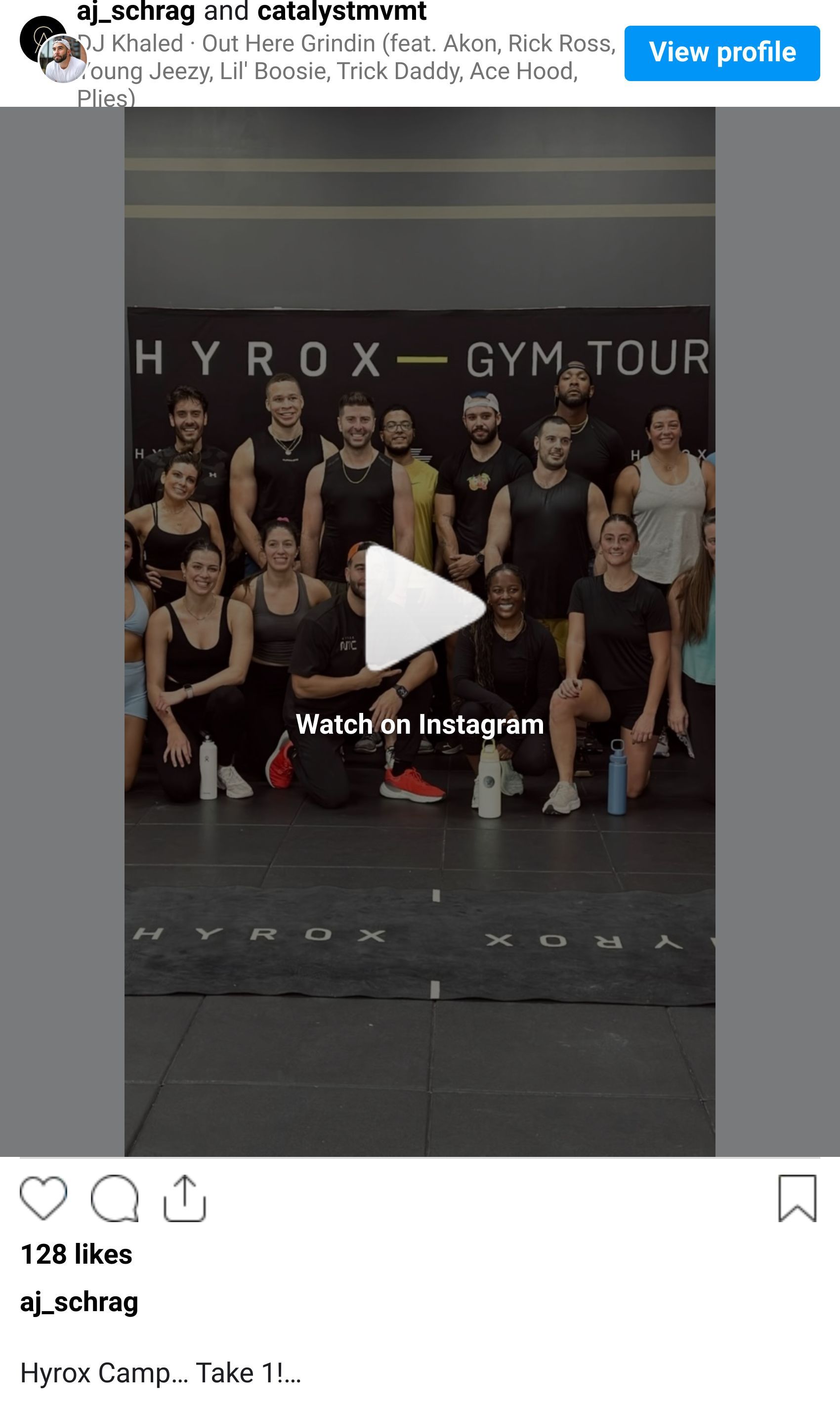
That allows facilities like Catalyst to become regional training hubs. And hubs tend to attract sponsorships, events, and community energy.
TL;DR
AJ Schrag built a fast-growing HYROX program by:
Launching with a simple Instagram flyer
Hosting large event-style camps
Structuring sessions into pods for scalability
Pricing accessibly to attract athletes from multiple gyms
Using races to drive retention
The result:
70–80 athletes per camp
185 total athletes trained
$100K in incremental revenue potential
Not bad for something that started with Canva.
For the full story, watch or listen to AJ’s interview on Gym World.
until next week,
j