- Gym World
- Posts
- The retention system hiding in plain sight
The retention system hiding in plain sight
Why your care problem is really a systems problem

John Franklin
March 27, 2026
Happy Spring Gym World,
Most gym owners genuinely care about their members. That's rarely the issue.
The issue is that caring takes time, and time is the one thing gym owners never have enough of. Your day fills up fast with programming, sales, cleaning, and everything else. By the time you remember it was someone's 6-month anniversary, they've already cancelled.
Laura Gibson has been thinking about this for a long time. She's the Head of Customer Support at Kilo. But before that, she was a school counselor, an educator, and a gym owner herself. She sat down with Mateo to talk about one thing: how to turn care into a system that actually helps your gym.
From the classroom to the gym floor
Laura's background isn't typical for someone working in gym software. She spent years as a school counselor, which basically means her entire career was built on figuring out how to make people feel seen and supported at scale.
When she moved into the gym world, she noticed the same pattern. Owners wanted to build strong relationships with their members. They talked about it constantly. But the actual follow-through was inconsistent because there was no procedure to support it.
Caring without a system, Laura says, mostly just becomes guilt.
The care system
Here’s the framework she walks through that you can steal.
It starts with choosing one milestone moment and building around that before doing anything else.
Here are some options:
onboarding
the 30-day mark
birthdays
attendance milestones
cancellations

💬 Most gyms have a sense that all of these matter, but that's part of the problem. When everything is a priority, nothing gets done consistently.
Once the moment is chosen, the next step is to define exactly how it works:
How will you know the moment has arrived?
Who is responsible for the follow-up?
What exactly should they do or say?
What materials do they need?
Where is all of this documented?
That last part is where most gyms fall apart. The process lives in the owner's head or in one coach's habits. When that person leaves, the system leaves with them.
💬 We’ve seen how Nick Palladino-King has seen success by setting up a clear retention system that has earned him a 95% retention rate.
Automation as a trigger, not a replacement
Laura said that automation should trigger the moment, but a human should deliver it.
Here’s an example:
A member hits their 5th session.
An automated message goes out acknowledging the milestone and lets them know there's a free FitAid waiting at the front desk.
The desk person is prepped with two or three genuine questions to ask when that member comes to claim it.
The automation creates the opening, but a human takes over to finish the job and keep it real.
💬 Clark Hibbs at Yellow Rose Fitness uses a similar approach. He told us that when automated messages don't get responses, the fix is usually adding a line like: "This was automated, but if you reply, a real person will get back to you." That one tweak dramatically increased engagement from new members.
The part most gyms skip entirely: cancellations
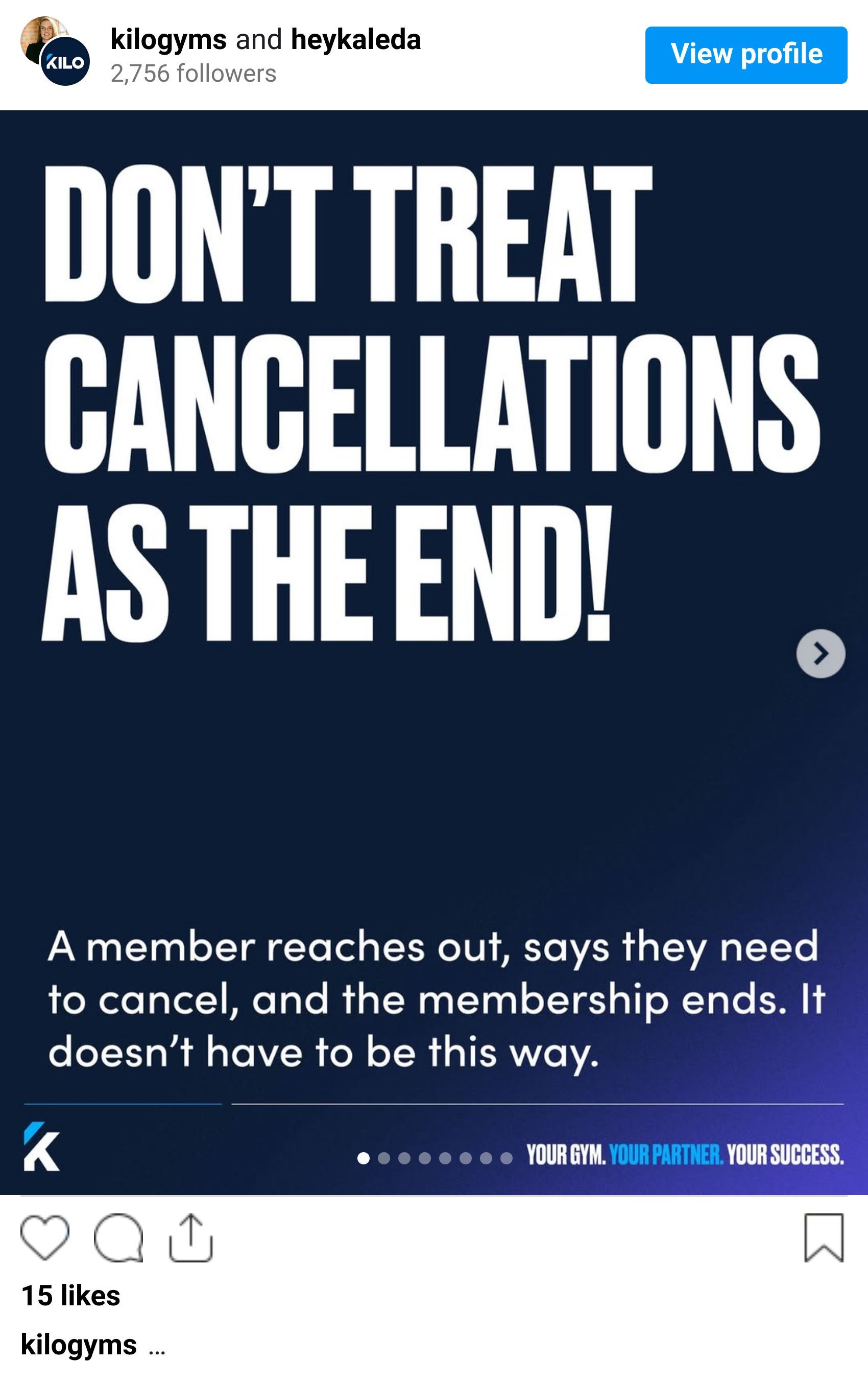
The cancellation interaction is one of the most important touchpoints in the entire member journey, and most gyms either ignore it or automate it completely.
When someone cancels, they're usually not gone forever. Life gets in the way, finances change, or maybe they just need a break. How a gym handles that moment shapes whether they ever come back, and whether they talk about your gym—good or bad—on the way out.
Laura says that automating the entire cancellation process is a mistake. The final interaction should build a bridge, not close a door.
💬Want help with tough conversations? This guide on handling objections has simple scripts you can adapt for cancellations, too.
Staff care is client retention in disguise
The same care systems that retain members should also apply to your team.
If your coaches don’t feel seen or supported, it can lead to resentment, which eventually will be felt at the gym. One staff departure can change your whole operation.
Celebrate staff milestones. Comment on life events. Build procedures around appreciation, and you’ll find staff will stick around longer.

💬 Ben Lucas of Flow Athletic retained staff for over 4x the industry average. He says that if you align the business's goals with staff’s goals, you’ll keep them around longer.
The reframe on standardization
We tend to think of systems and care as separate categories. Laura pushes back on that.
A coach who doesn't know what gift to send, what to spend, or how to follow up isn't uncaring; they're unprepared. Creating a standard procedure removes the paralysis, and your coaches will know exactly what to do without you telling them.
TL;DR
Laura's framework for operationalizing care comes down to a few things:
Pick one milestone moment before trying to build an entire client journey
Define the who, what, when, and where for every touchpoint in that moment
Use automation to trigger the moment, and a human to deliver it
Revisit every system quarterly — staff, prices, and vendors all change
Apply the same care infrastructure to your team, not just your members
The goal isn't to make client relationships feel mechanical. The goal is to make sure they actually happen.
For a deeper breakdown of Laura's framework, watch or listen to the full Gym World interview.
until next week,
j