- Gym World
- Posts
- The Biggest Mistake Gym Owners Make With Real Estate
The Biggest Mistake Gym Owners Make With Real Estate
It’s happening before most owners realize it

John Franklin
May 15, 2026
Happy Friday Gym World,
If you've ever thought about a second location or a bigger space, you know how easy it is to get excited about a building before you've asked any of the important questions. Stu Brauer has a framework for that, and it starts well before you tour anything.
Stu has been on the pod a few times now, always sharing his take on gym real estate, rent, and what to think about when expanding. He ran his own gym for years before starting The Gym Real Estate Company, which helps gym owners lease and buy buildings.
Here's how he approaches real estate decisions: 👇
Your members are already telling you where to open next
If you're thinking about a second location, the first thing Stu wants you to do is understand where your current members are coming from.
He recommends a tool called Maptive, which lets you turn member addresses into a heat map. You upload your current and past client addresses into a CSV file, and it shows you where your members are concentrated.
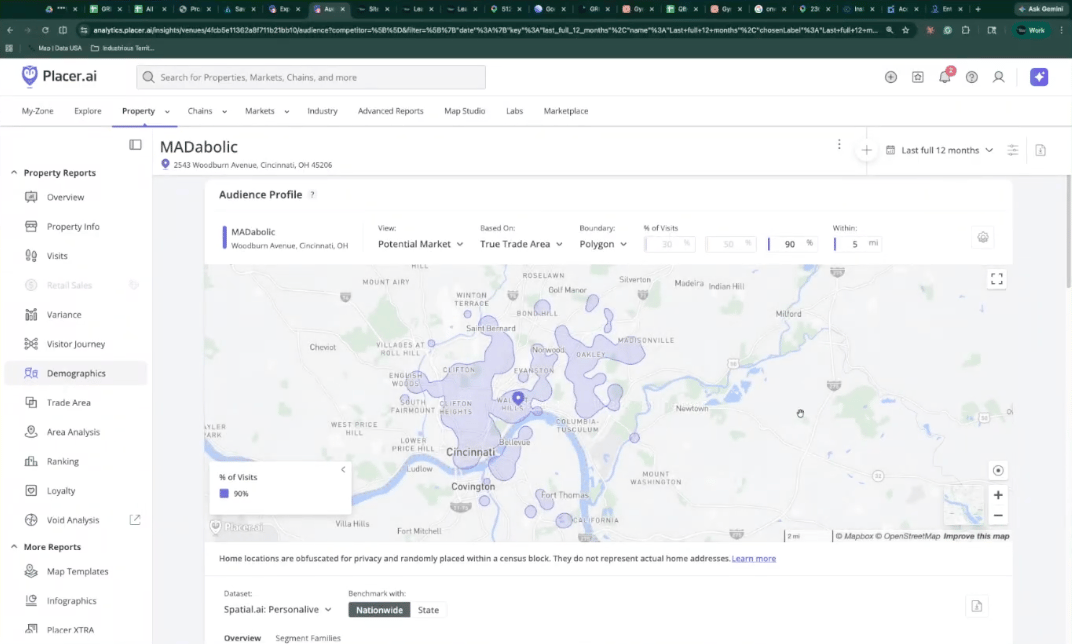
(Most members in this example are clustered in the south of the city, which is why opening way up north wouldn’t make sense.)
With a heat map, you can see where demand is and how far people are willing to travel to your gym, instead of guessing.
💬 Stu likes seeing around a 30-40% trade area overlap between locations. There’s enough overlap to benefit from existing awareness, without one location hurting the other.
Rent is only one part of the decision
Too many gym owners fall in love with a space before understanding what it'll cost to make it work. Factors such as HVAC, construction costs, zoning, and building use requirements can significantly alter a location's costs.
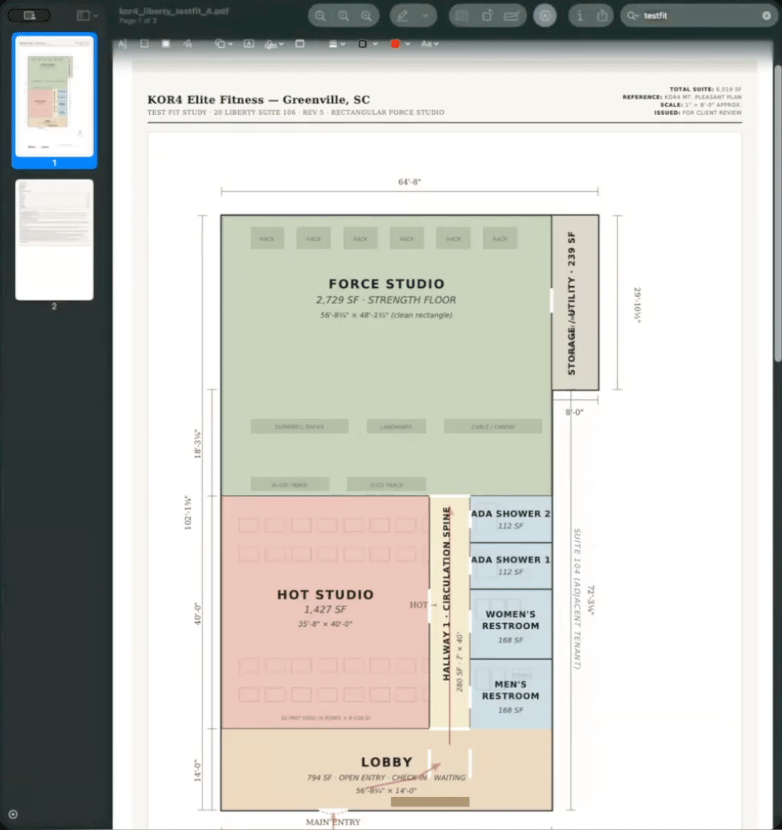
That’s why Stu recommends a test fit before committing to a space you’re considering. Basically, you map out your ideal gym layout and bring it to a general contractor to get a rough idea of buildout costs. This helps you figure out:
how the equipment layout and traffic flow would work
what construction is realistically going to cost
whether the space works for your model at all
Here’s an example of a test fit for a potential KOR4 location:
And when it comes to figuring out how much space you need, Stu suggests working backward. Start with your revenue goal, work out how many members you need to hit it, and then figure out how much space that requires.
💬 If you want to go deeper on how to think about rent and what you can afford, Stu breaks it down in this article.
A second location should make your business better, not just bigger
Finding the right space is one thing. What you do with it is another matter. Stu says a second location should do at least one of these things:
get the same results faster
get the same results with lower cost
get the same results with less space or complexity
And if none of that is happening, you’re just making the business harder to run.
💬 A lot of gyms we talk to want things to stay simple if they’re thinking about multiple locations down the line. Activate Body Personal Training is a good example.
TL;DR: Before you go find a building
Stu's spent years helping gym owners through purchases and leases. So when it comes to where most people go wrong, he’s pretty direct about it:
Don’t go looking for properties before you're ready to look for properties.
The gym industry loves expansion stories. Bigger spaces, second locations, and huge facilities get attention. But the ones who get it right do their homework first:
they know their numbers
they know their customers
they know their trade area
Then they go find a building.
💬 Stu also does discovery calls through The Gym Real Estate Company if you want help working through your own situation. Go give him a shout.
Hope this helps,
j