- Gym World
- Posts
- Scaling a gym that keeps its soul intact
Scaling a gym that keeps its soul intact
How focus, patience, and clear systems guided One Academy’s growth

John Franklin
February 06, 2026
What’s up Gym World?
This week on the pod we spoke with Jesse Bruce and Eric Vieira from One Academy.
One Academy is a useful case study for gym owners because it shows how a gym can grow to multiple locations, support a large staff, and still keep a strong member experience. None of this happened quickly, and none of it happened by accident.
Here’s what gym owners can learn from how One Academy built their business.
The gym was built around a clear reason for existing
Before opening One Academy, Jesse didn’t have a business background and had struggled with addiction, legal trouble, and feeling like an outsider. Lifting weights gave him structure and confidence, and joining a team sport later showed him what a supportive community could feel like. He wanted to bring that same sense of growth and connection to a gym.
Obstacle course racing was getting popular at the time. Jesse started competing, then set up timed courses in local parks and ran monthly competitions where people could track their times. That helped him build a reputation, see what people responded to, and grow a small community before he even had a gym.
When he opened One Academy, he wanted it to feel like that same community. To make that happen, classes were scheduled so people spent about 90 minutes for a 60-minute session, with built-in gaps that let members connect with each other and with the coaches.
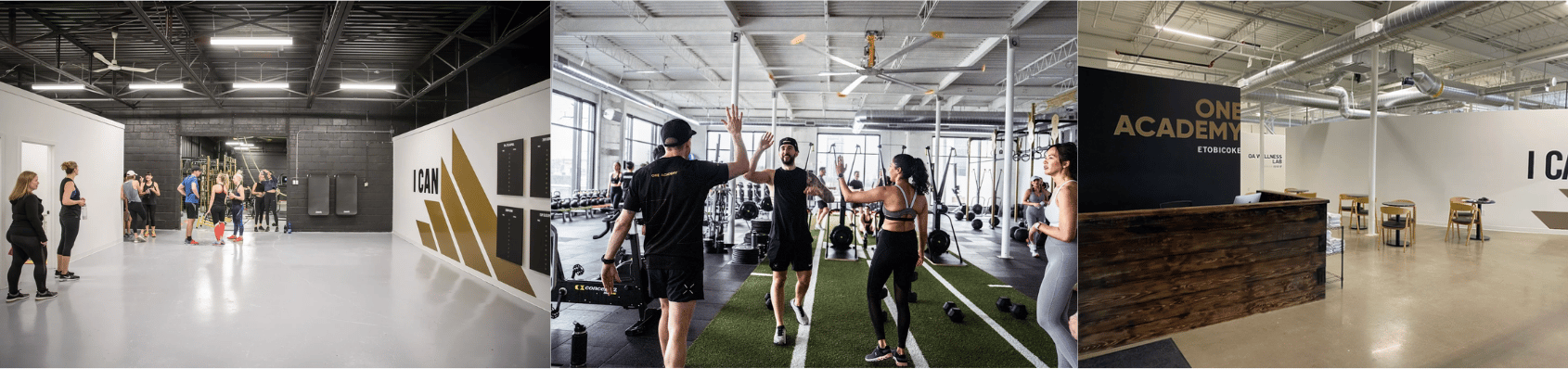
The space was also designed so members could stay and connect after class. Lounges and a café gave people places to hang out, cool down, and spend time together instead of just training and leaving.

The training model attracted a specific type of member
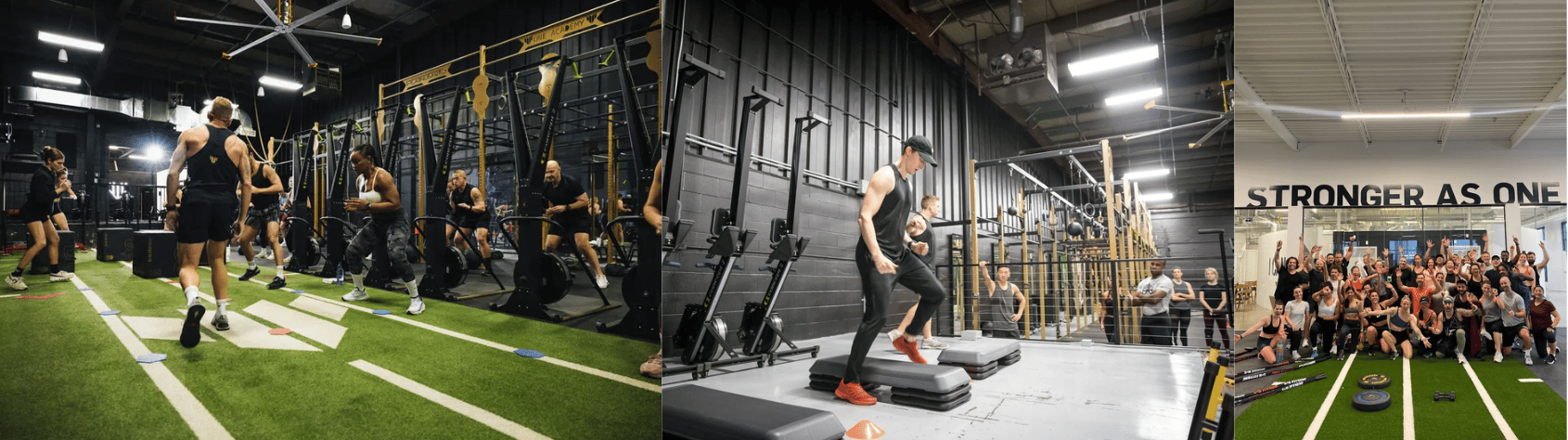
One Academy never tried to appeal to everyone. From the start, the training focused on strength, conditioning, and athletic development, with measurable progress that members could track. Early on, that came through obstacle course racing, which attracted people who wanted a challenge and a sense of achievement.
Today, that focus shows up in the HiFLUX system, a four-week progressive program designed to keep members engaged:
Weeks 1-2: Build volume
Week 3: Increase intensity
Week 4: Push for personal bests and reset the cycle
Jesse and Eric built the program around simple, effective movements and clear cycles, which naturally attracted members who wanted exactly what One Academy provides.
💬 Clear programming has helped them grow a committed community and maintain waitlists in high-demand locations. One of Jesse and Eric’s gyms currently has a 200-person waitlist.
Growth decisions were based on stability
Jesse and Eric approach growth cautiously. They only consider opening a new location once the existing gym is stable and predictable, and they use a clear process to decide when and where to expand:
Confirm the current gym is ready: They make sure the community is strong and day-to-day operations are under control. Expanding too early can strain staff and compromise the member experience.
Map where members live: They extract postal (zip) codes and create a heat map to see where members are coming from and where demand already exists.
Review demographics and competition: They check whether the neighborhood has the right population and whether the market is already saturated.
Work with experienced real estate partners: The right landlord and location reduce risk and set the gym up for long-term success.
Target a three-year return: They only move forward if the location can realistically pay back within roughly three years.
Following this process has allowed them to expand to three locations, generating $150–250K in monthly revenue across the gyms while maintaining the culture and experience that members value.

Systems were built to support consistency
As One Academy grew, Jesse and Eric put systems in place, so staff didn’t have to guess what “good” service looked like. There are clear SOPs for coaching, operations, and the member experience, and every role has defined responsibilities.
💬 Today, the team includes around 80 staff, with 30 coaches delivering training across all locations.
They also built a leadership team with ownership over key areas:
General Manager / Director of Marketing: Oversees all aspects of revenue generation and the team supporting it
Operations Lead: Manages full-time staff across all locations
Coaching Leadership: Guides programming and ensures a consistent training experience
With these systems in place, coaches can deliver a consistent experience, and members get the same high-quality training and community no matter which location they visit.
The partnership stayed simple and defined
Jesse focused on coaching and programming. He created the HiFLUX training methodology and stayed deeply involved in athlete development. His background in endurance and obstacle racing, including marathons, Ironman events, and 38 first-place finishes, shaped the gym’s culture and mission.
Eric focused on the business side, leading marketing, systems, onboarding, and internal infrastructure. By taking ownership of these areas, he made sure Jesse’s vision could scale across multiple locations. Each of them was accountable for their own area, which kept decisions fast and prevented conflicts.
And because their roles were clear and they communicated constantly, the business could grow without sacrificing culture or community.
💬 For anyone thinking about starting a business with a partner, defining roles and accountability early is crucial. You can read more about common partnership mistakes to avoid here.
TL;DR
One Academy grew by being patient, staying focused on what they do best, and building the business deliberately. Jesse and Eric didn’t chase trends or open locations just because the moment felt right. Every choice, from programming to member experience to staffing and leadership, was made to protect the community and the culture they wanted to create.
The result is a gym that can scale, support a large team, and still feel like a place people want to be. That combination of patience, clarity, and intention is what allowed them to turn a personal mission into a successful business.

If you found this breakdown useful, you can find more like it at Gym World.
ttyl,
j